TikTok haul videos push the agenda that the more you buy, the better. Typically coming from companies like SHIEN and TEMU, this style of content appeals primarily to teenage girls.
With the affordability aspect of SHIEN, the desire to buy large quantities is greater. This is especially noticeable during the shift of seasons or around holidays.
Initially, I was fully on board with these videos. I grew up in a time when YouTube Christmas haul videos went viral every year, and the recent videos gave me a deep feeling of nostalgia.
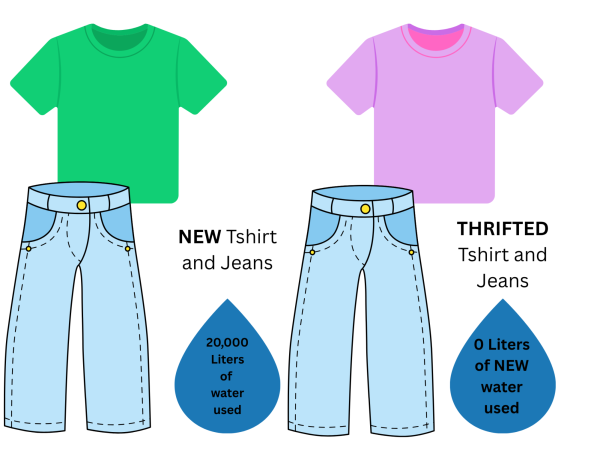
After taking a step back, however, I realized the problematic systems behind companies like SHIEN. Sure, buying new clothes is an easy way to get a dopamine hit, but it also has detrimental effects on the Earth. This is true to the extent that the industry is the second-biggest consumer of water, as stated by the UN Environment Programme.
Fast Fashion isn’t new, either. The phrase was first coined in 1990. “It’s [fashion] a language understood by young fashion followers on a budget who nonetheless change their clothes as often as the color of their lipstick,” Anne-Schrio, in her New York Times Article, said. This term, highlighting the then-physical stores in New York, has a timeless aspect to it. In fact, it is possibly more prevalent today than ever before. In an age of modern technology that allows us to do everything from our phones, it is easy to succumb to the desire for that cute new top that everyone is wearing on Instagram.
In a simple click of a button, your new shirt will impress all of your friends and peers the first time you wear it out. The problem is, by the time you’ve worn it once or twice, it has completely gone out of style.
Now, a new shirt is popular, or a type of skirt, or a style of jeans. The fashion cycle is never-ending, and it has increasingly quickened its pace. A microtrend, as defined by Trend Bible, is “A niche or indus
try-specific consumer behavioural trend which is mass market-ready and actionable. With a shorter life span, micro trends usually filter down from Macro Trends and provide opportunities for innovators, designers, and marketers to tap into these emerging consumer mindsets.” These are most clearly portrayed on TikTok, where they are reposted and shared constantly.
These are essentially the peak of fast fashion, at times lasting for as short as a week or two.
Your new product barely has time to ship before it’s out of style.
As a teenage girl who makes minimum wage, I deeply sympathize with the aspect of affordability that comes with apps such as SHIEN. I have ordered from the site myself before. I noticed that while the clothing I got was super cute, it was practically falling apart. For most people, buying from fashion brands that claim to be sustainable isn’t feasible due to the hefty price tag that is associated with it.
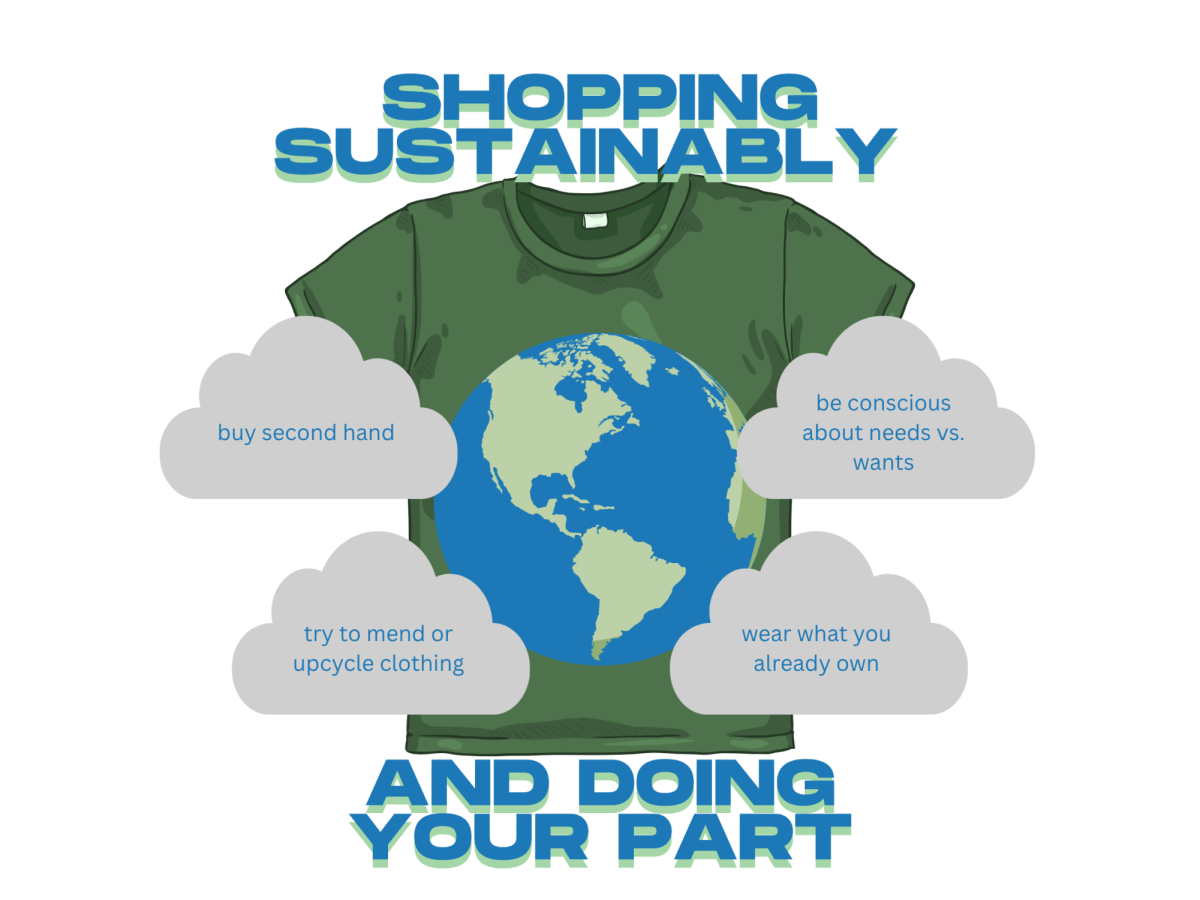
Suppose you can buy from companies like Toad & Co., great for you! But if you aren’t, it is important to realize there are other options between buying from brands that are fundamentally built around fast fashion.
I’d encourage you to go through your closet. Oftentimes, you have more than you realize, and can make some outfits that are lethal combinations. Looking through my closet about once a month has completely changed the way I look at my self-expression and personal style, resulting in me gravitating towards things I hadn’t reached for before.
Check out locally owned thrift stores, or hit up Goodwill. While a large majority of people I’ve talked to groan at the idea, it is a really fun practice to look around thrift stores when you are in the mood to shop, as you can see directly how fashion trends can evolve.