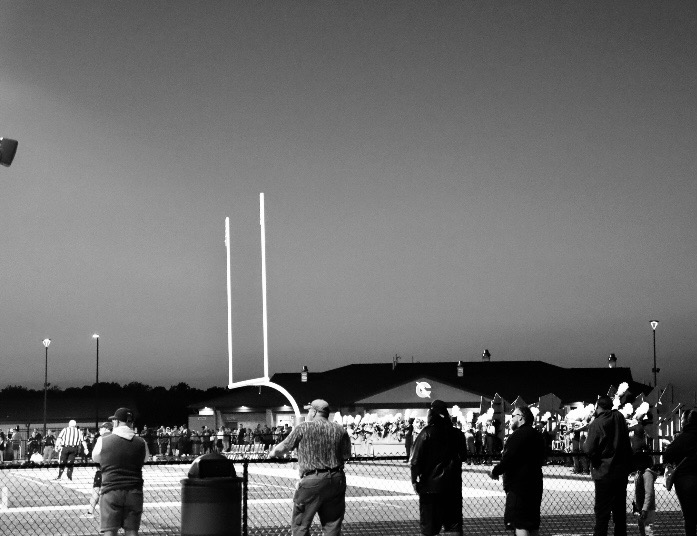
High school: the time of awkward first dates, school dances, and football games. Not to mention, of course, the parties. That’s at least that’s how the movies portray it.
With these associations, it’s no wonder that students feel pressure to participate in the events.
Prior stories detail what goes into orchestrating these events behind the scenes, but diving further into the relationship between students and social events is crucial in order to understand the social dynamics behind high school.
There is a mutual understanding from students everywhere that these four years are nothing like how they are displayed on the big screen.
“In the movies, high school is like a shark tank and everyone feeds off a person or a group of people. In real life, high school is a whole ocean…Everyone just does their own thing,” Junior Briley Certain said.
Not only this, but the cliches that have been poked at for years in media no longer are applicable. Students now are involved in a huge variety of things, often that don’t have anything to do with each other. Not many people stick to a singular facet of extracurricular type.
Briley Certain is a prime example of this, not only having previously played on the softball team, but also being an assistant director for the Maple Creek drama department, president of the film club, taking pictures at school events as a photographer, and doing lots of other things in her day-to-day life.
With this being said, social groups are constantly intertwined, and it is relatively uncommon for a friend group to be strictly made up of people in one particular extracurricular.
For many students, it can be difficult to balance between wanting to be involved at school, while also maintaining grades, work hours, and a variety of other responsibilities.
“I do feel like I’m missing out on a typical high school experience mainly because I am so darn busy all the time or I just don’t have room in my schedule,” Sophomore Reagan Hopkins said.
Many underclassmen also struggle with the lack of having a license or car, meaning that they have to rely on their parents or other students in order to participate in extracurricular activities or school events.
“When I was in my freshman year, I realized that I could not go to some football games or go outside and attend a lot of the school events because I didn’t have a ride and my parents have a job and responsibilities– being without a car is limiting and it felt like I was missing out on a lot of stuff because I couldn’t get there,” Hopkins said.
This can be isolating, and one of the many reasons why students find themselves distanced from their peers. In media, oftentimes the struggle to make plans or hang out with friends and get transportation there goes unaddressed, when in actuality it is a very distinct part of high school.
The four years spent inside and out of the brick walls is described differently from person to person. One thing remains true, though. No matter who you are, or what your life, social surroundings, and future plans are, they all help to form who you will eventually become.
“The high school experience is something that isn’t necessarily defined into one thing. It truly is different for everyone, and, whether a cliche or not, it most definitely flies by,” Certain said.